
Best Kidney doctor in Chittagong
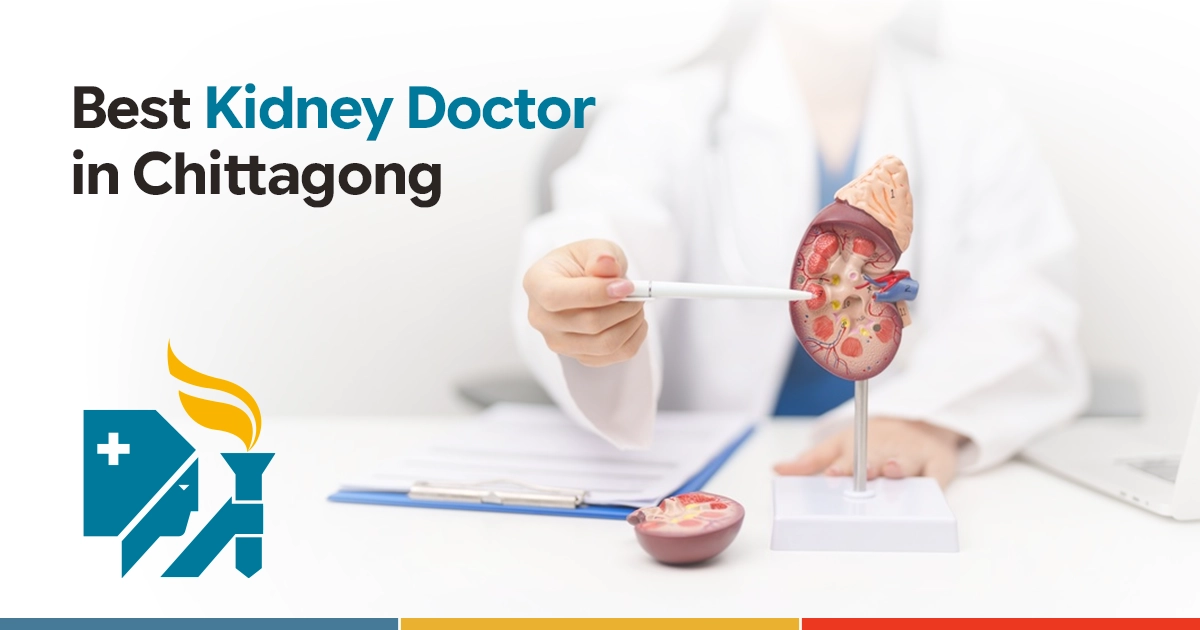
Dialysis is not one treatment. It is a treatment that has to be matched to the patient, and the difference between the right match and the wrong one is measured in blood pressure crashes, cardiac events, and how the patient feels for the rest of the day.
A patient with a weak heart or low blood pressure cannot tolerate conventional hemodialysis, which pulls fluid off quickly over four hours. Put that patient on a standard machine, and the pressure drops mid-session, the session gets cut short, and the fluid stays in the body.
The Kidney Care Centre at Apollo Imperial Hospitals was built around that problem. Below is what the department actually offers.
Three Types of Dialysis Under One Roof
Conventional hemodialysis is the standard treatment for patients with stable blood pressure and no significant cardiac problem, usually three sessions a week in the dialysis ward.
SLED (sustained low-efficiency dialysis) removes fluid and toxins slowly over a longer session. This is the option for patients with low blood pressure, cardiac disease, or any condition where a rapid fluid shift is dangerous. SLED is not widely available in Chattogram, and it is the reason many unstable patients who could not tolerate dialysis elsewhere can be dialysed here.
CRRT (continuous renal replacement therapy) runs continuously in the ICU for critically ill patients, most often those in shock with acute kidney injury. It is the gentlest form of renal support and the only one suitable for a patient on vasopressors.
Bedside Dialysis in ICU, CCU, and HDU
A critically ill patient should not be moved to a dialysis ward. Our team performs dialysis at the bedside in the ICU, CCU, and HDU, so the patient stays on their monitor, on their ventilator, and with their nursing team throughout.
This is the same clinical logic behind bedside critical care ultrasonography and bedside endoscopy in our critical care department: the patient stays still and the service comes to them.
Three-shift Dialysis service
Our dialysis unit runs three shifts daily, in the morning, at midday, and in the evening. For a patient on maintenance dialysis three times a week for years, the shift timing decides whether they keep their job. Evening slots let working patients dialyse after hours, and morning slots suit patients travelling in from outside the city.
Water and Dialysate Quality
This part never appears in hospital advertising, and it should. A hemodialysis patient is exposed to roughly 120 liters of water per session across the dialyzer membrane. If that water carries bacterial endotoxin, the patient gets chronic inflammation, fevers, and over years, worse outcomes.
Our unit runs two separate quality controls:
- Dialysate culture and sensitivity. Dialysate fluid is cultured and only approved for use after the result comes back clear.
- RO plant water testing, including endotoxin testing. Water from the reverse osmosis plant is tested for endotoxin, with samples sent to Dhaka for the assay.
Infection Control and Separate Machines
Hepatitis B and hepatitis C transmission through dialysis units is a documented problem wherever infection control is loose. We run specialized infection control facilities in the renal unit, including separate machines dedicated to patients with certain infectious conditions, including hepatitis B and hepatitis C.
A separate machine is the only reliable safeguard. Disinfection protocols matter, but physical separation of machines is what stops cross-infection between patients who share a unit three times a week for years.
This sits alongside the hospital-wide Infection Control Department and Central Sterile Supply Department (CSSD).
Dialysis Access Procedures
Dialysis needs reliable vascular access. Our team performs dialysis catheter insertion, including femoral and internal jugular approaches, along with temporary and permanent dialysis catheter placement.
Getting access right matters because a poorly placed catheter means poor blood flow, inadequate clearance, and repeated procedures for the patient.
Dialysis Package

Our dialysis package is priced at around BDT 5,500 per session and includes:
- hourly blood pressure monitoring through the session;
- blood sugar monitoring;
- vitamin injection;
- meals during the session.
Dialysis in a cabin is available for patients who want privacy. Please confirm current pricing when you call, since package rates are periodically revised.
Kidney Disease Management Beyond Dialysis
Dialysis is one part of nephrology. Our department manages both acute kidney injury and chronic kidney disease, which means slowing progression in patients who are not yet on dialysis and treating the causes that put them there.
In Bangladesh, the two leading causes of chronic kidney disease are diabetes and hypertension, and both are controllable. A patient whose diabetes and blood pressure are tightly managed from an early stage may never reach dialysis at all.
Renal Screening Package, OPD Basis
Kidney disease is silent in its early stages. By the time a patient notices swelling, breathlessness, or reduced urine output, significant function is already lost. Our OPD-based renal package screens for exactly this and includes:
- complete blood count (CBC);
- serum creatinine;
- urine routine examination (urine R/E);
- urinary albumin-to-creatinine ratio (ACR);
- uric acid;
- HbA1c.
The urinary ACR is the test worth understanding. It detects small amounts of albumin leaking into the urine, which appears years before creatinine starts to rise. In a diabetic patient, a raised ACR is the earliest usable warning that the kidneys are being damaged, and it is the point at which treatment changes outcomes.
Anyone with diabetes, high blood pressure, a family history of kidney disease, or long-term painkiller use should have this panel done annually.
Our Nephrology Consultant
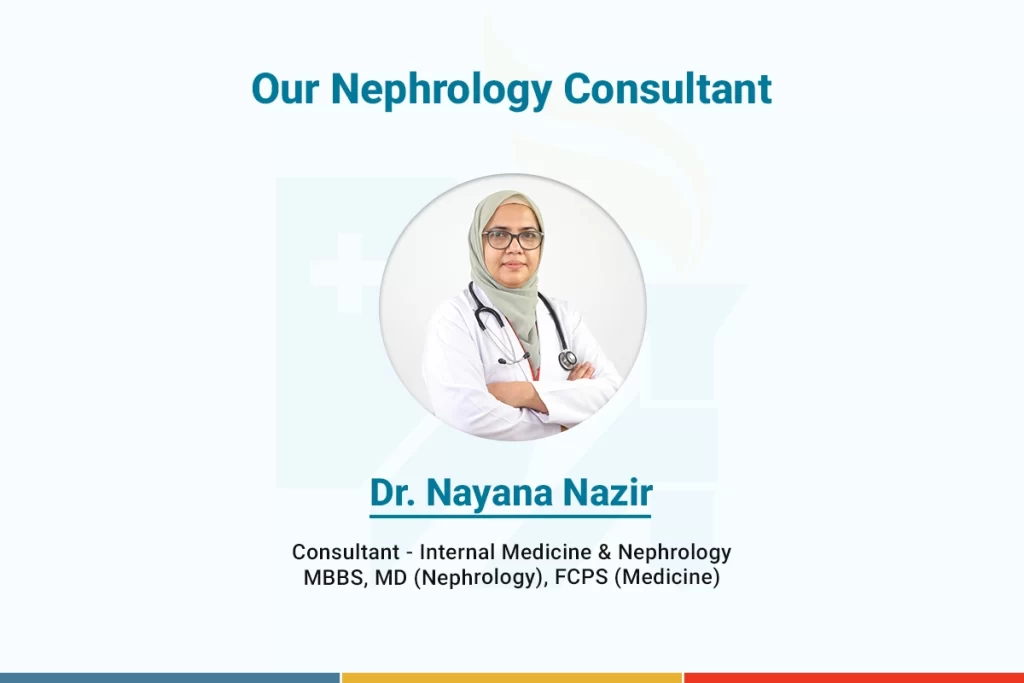
Dr. Nayana Nazir, Consultant in Internal Medicine and Nephrology, holds MBBS, MD in Nephrology, and FCPS in Medicine, with more than 12 years of experience.
The combination matters. MD in Nephrology is the full postgraduate degree in the specialty, and FCPS (Medicine) is the fellowship of the Bangladesh College of Physicians and Surgeons in internal medicine. Most dialysis patients also carry diabetes, hypertension, anemia, and heart disease, so a nephrologist with a general medicine fellowship treats the whole patient.
Book an Appointment
The nephrology OPD runs from 9 am to 9 pm. Appointments are booked by phone or in person as a first consultation, follow-up consultation, or report check consultation.
For appointments and information: +880 9610 847 847 For 24-hour emergency service: +880 9610 833 833
Address: 2158/A, Zakir Hossain Road, Khulshi, Chattogram
Website: www.aihlbd.org
FAQs
Do you offer dialysis for patients with low blood pressure or heart disease?
Yes. SLED is designed for exactly these patients, removing fluid slowly enough to avoid the pressure drops that make conventional hemodialysis unsafe for them.
Can a patient in the ICU receive dialysis?
Yes. We perform bedside dialysis in the ICU, CCU, and HDU, and CRRT is available for critically ill patients in the ICU.
Are there separate machines for hepatitis B and C patients?
Yes. Our renal unit maintains separate dedicated machines for certain infectious patients as part of its infection control protocol.
What time slots are available for maintenance dialysis?
Three shifts run daily: morning, midday, and evening.
How do I check whether my kidneys are healthy?
Our OPD renal package covers CBC, serum creatinine, urine R/E, urinary ACR, uric acid, and HbA1c. Anyone with diabetes or high blood pressure should have it done once a year.
Dr. Safayat Bin Amin
MBBS (CMU)
Diploma in Public Health and Diploma in Immunology