Best cardiovascular surgery doctor in Chittagong | Apollo Imperial Hospitals
Heart surgery is the one operation families research for weeks before agreeing to it. That is reasonable. The chest is opened, the heart is stopped, and a machine takes over the work of the heart and lungs while the surgeon operates.
What makes it survivable and routine is not one surgeon. It is the surgeon, the anesthetist, the perfusionist running the bypass machine, the theater nurses, and the intensive care team afterwards, all working to the same protocol.
Apollo Imperial Hospitals runs Cardiothoracic and Vascular Surgery (CTVS) with three consultants, two dedicated cardiac operation theaters, and a 24-bed Cardiac ICU with step-down beds.
Best Cardiovascular Surgery Doctor in Chittagong at Apollo Imperial Hospitals
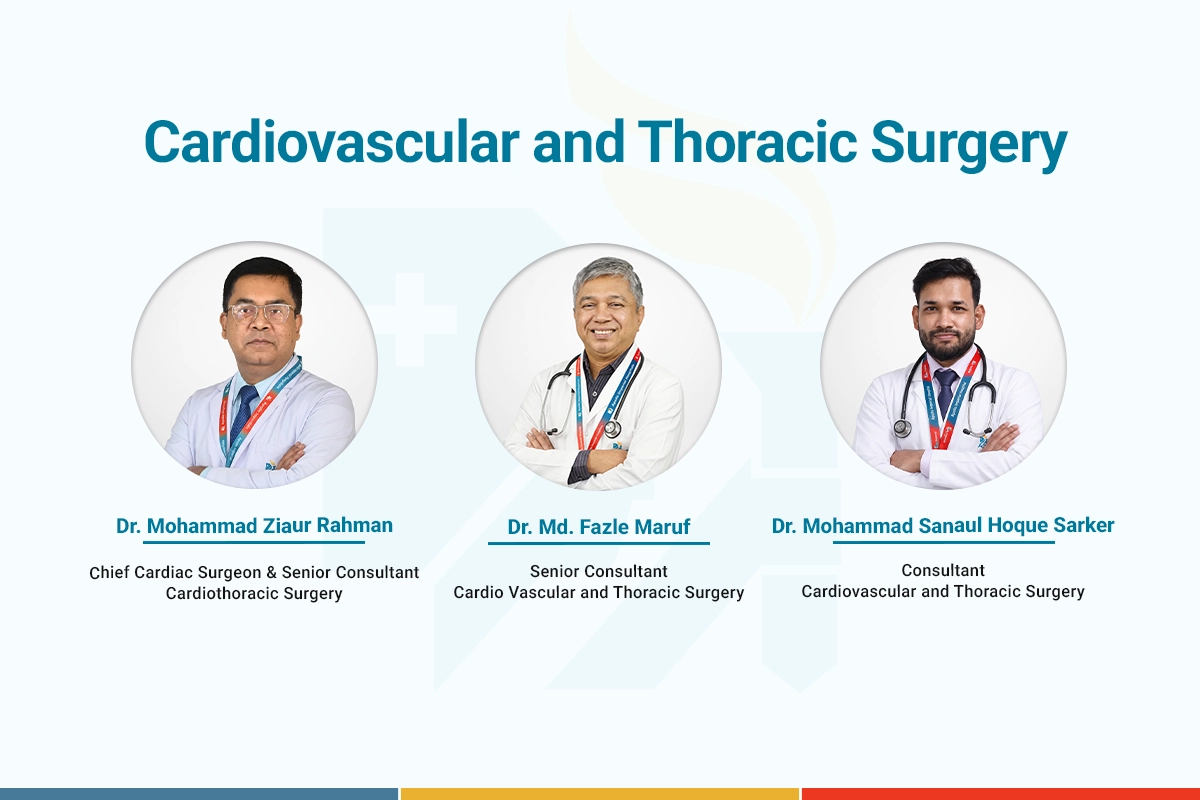
Dr. Mohammad Ziaur Rahman, Chief Cardiac Surgeon and Senior Consultant in Cardiothoracic Surgery, holds MBBS and MS in Cardiothoracic Surgery, with more than 20 years of experience. He leads the cardiac surgery team.
Dr. Md. Fazle Maruf, Senior Consultant in Cardiovascular and Thoracic Surgery, holds MBBS and MS in Cardiovascular and Thoracic Surgery, with more than 22 years of experience.
Dr. Mohammad Sanaul Hoque Sarker, Consultant in Cardiovascular and Thoracic Surgery, holds MBBS, MS in Cardiovascular Thoracic Surgery, FICRS, and FACS from the United States, with more than 13 years of experience.
MS in Cardiovascular and Thoracic Surgery is the full university postgraduate degree in the specialty, held by all three. FACS is a fellowship of the American College of Surgeons, which requires a reviewed record of surgical practice alongside qualifications. Combined experience on the team exceeds 55 years.
Operations we perform
- Coronary Artery Bypass Graft (CABG);
- Valve Replacement Surgery, Including Aortic (AVR), Mitral (MVR), and Double Valve Replacement (DVR);
- Minimally Invasive Cardiac Surgery (MICS);
- Adult Congenital Heart Surgery;
- Surgery for Heart Failure;
- Aortic Surgery;
- Peripheral Vascular Surgery.
Left ventricular assist device implantation and heart transplantation are planned additions to the department.
What these operations treat
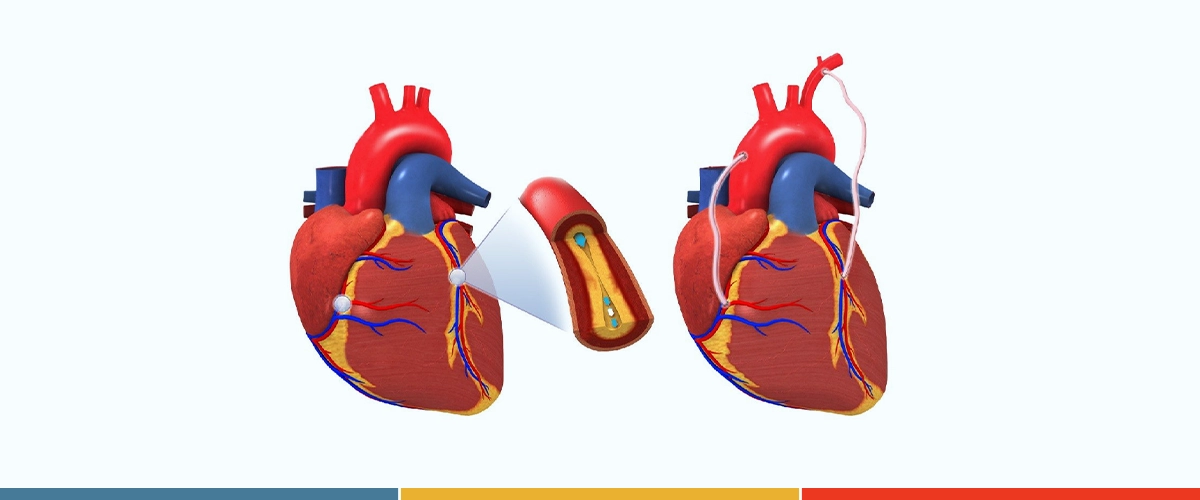
If you are unfamiliar with these surgeries, let us walk you through them, as being aware can help you take an informed decision.
CABG is bypass surgery. When coronary arteries are blocked in several places or blocked at points unsuitable for stenting, the surgeon takes a vessel from the chest wall, arm, or leg and routes blood around the blockage. For patients with multi-vessel disease, particularly those with diabetes, bypass surgery often gives better long-term results than stenting.
Valve replacement treats a valve that has become too narrow or leaks too badly for the heart to work against. Rheumatic heart disease, still common in Bangladesh, damages the mitral valve in people who had rheumatic fever as children, and many of those patients present in their thirties and forties.
MICS performs cardiac surgery through a small incision between the ribs, leaving the breastbone intact. For suitable candidates, that means less pain, a shorter hospital stay and a faster return to normal activity. Not every patient is a candidate, and your surgeon will say whether you are.
Aortic surgery treats aneurysm and dissection of the body’s main artery. Aortic dissection is a surgical emergency with hourly mortality if untreated.
Peripheral vascular surgery treats disease in the arteries and veins outside the heart, including the leg artery blockages that cause claudication and, in diabetics, non-healing foot ulcers.
The critical care behind the surgery
The first 48 hours after cardiac surgery decide much of the outcome. Our CTVS critical care units are equipped with:
- Colour Doppler and echocardiography systems;
- Invasive pressure monitoring systems;
- Ventilators and non-invasive ventilation;
- Defibrillators;
- Infusion pumps;
- Temporary pacemakers, both transdermal and transvenous;
- Intra-aortic balloon pump;
- Arterial blood gas and electrolyte analyzers;
- Continuous oxygen supply.
The intra-aortic balloon pump is the piece most patients have never heard of. It sits in the aorta and inflates between heartbeats, which raises blood flow to the heart muscle while reducing the work the heart has to do. For a weak heart in the hours after surgery, it buys the recovery time the muscle needs.
Our nursing team covers these units around the clock.
Working with cardiology
Cardiac surgery does not operate alone. Our Clinical and Interventional Cardiology department performs the angiography that defines the disease and decides whether a patient needs stenting or surgery. That decision is made jointly.
The hospital’s cardiac capacity covers a 20-bed Coronary Care Unit, a 15-bed Cardiac High Dependency Unit, a 24-bed Cardiac ICU with step-down beds, and two dedicated cardiac operation theatres. Cardiopulmonary rehabilitation after surgery runs through our Physical Medicine and Rehabilitation Center.
Book an appointment
The CTVS OPD runs from 9 am to 9 pm, with individual consultant schedules. Appointments are booked by phone or in person as a first consultation, follow-up consultation, or report check consultation. Bring every previous report, angiogram, and echocardiogram with you.
- For appointments and information: +880 9610 847 847
- For 24-hour emergency service: +880 9610 833 833
- Address: 2158/A, Zakir Hossain Road, Khulshi, Chattogram
- Website: www.aihlbd.org
FAQs
Who performs heart surgery at Apollo Imperial Hospitals?
Dr. Mohammad Ziaur Rahman is Chief Cardiac Surgeon, working with Dr. Md. Fazle Maruf and Dr. Mohammad Sanaul Hoque Sarker. All three hold MS in cardiothoracic or cardiovascular and thoracic surgery.
Do you perform bypass surgery and valve replacement?
Yes. We perform coronary artery bypass graft (CABG) and aortic, mitral and double valve replacement.
Can heart surgery be done without opening the breastbone?
In suitable patients, yes. Minimally invasive cardiac surgery (MICS) works through a small incision between the ribs, which shortens recovery. Your surgeon will confirm whether you are a candidate.
Do you treat blocked leg arteries and varicose veins?
Peripheral vascular surgery is part of the department, covering arterial and venous disease outside the heart.
What intensive care is available after cardiac surgery?
A 24-bed Cardiac ICU with step-down beds, a 20-bed Coronary Care Unit and a 15-bed Cardiac High Dependency Unit, equipped with invasive monitoring, ventilators, temporary pacing and an intra-aortic balloon pump.
Dr. Safayat Bin Amin
MBBS (CMU)
Diploma in Public Health and Diploma in Immunology